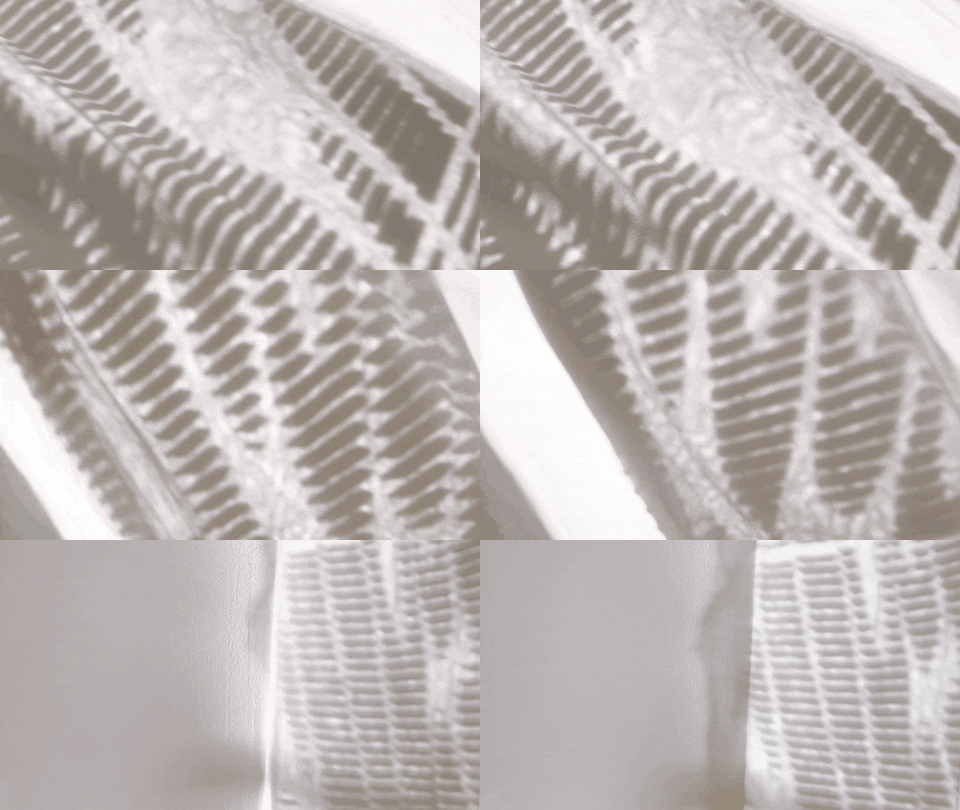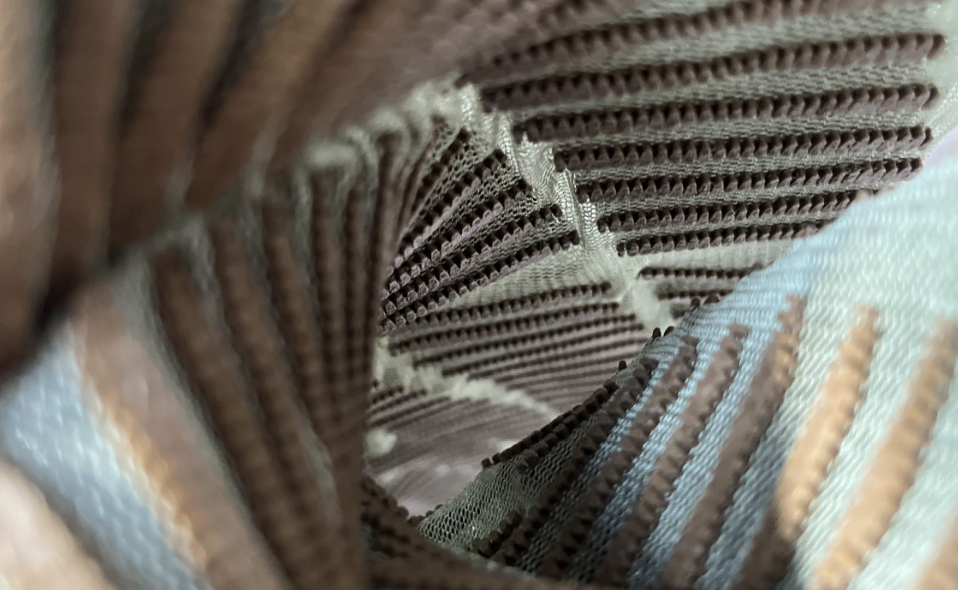
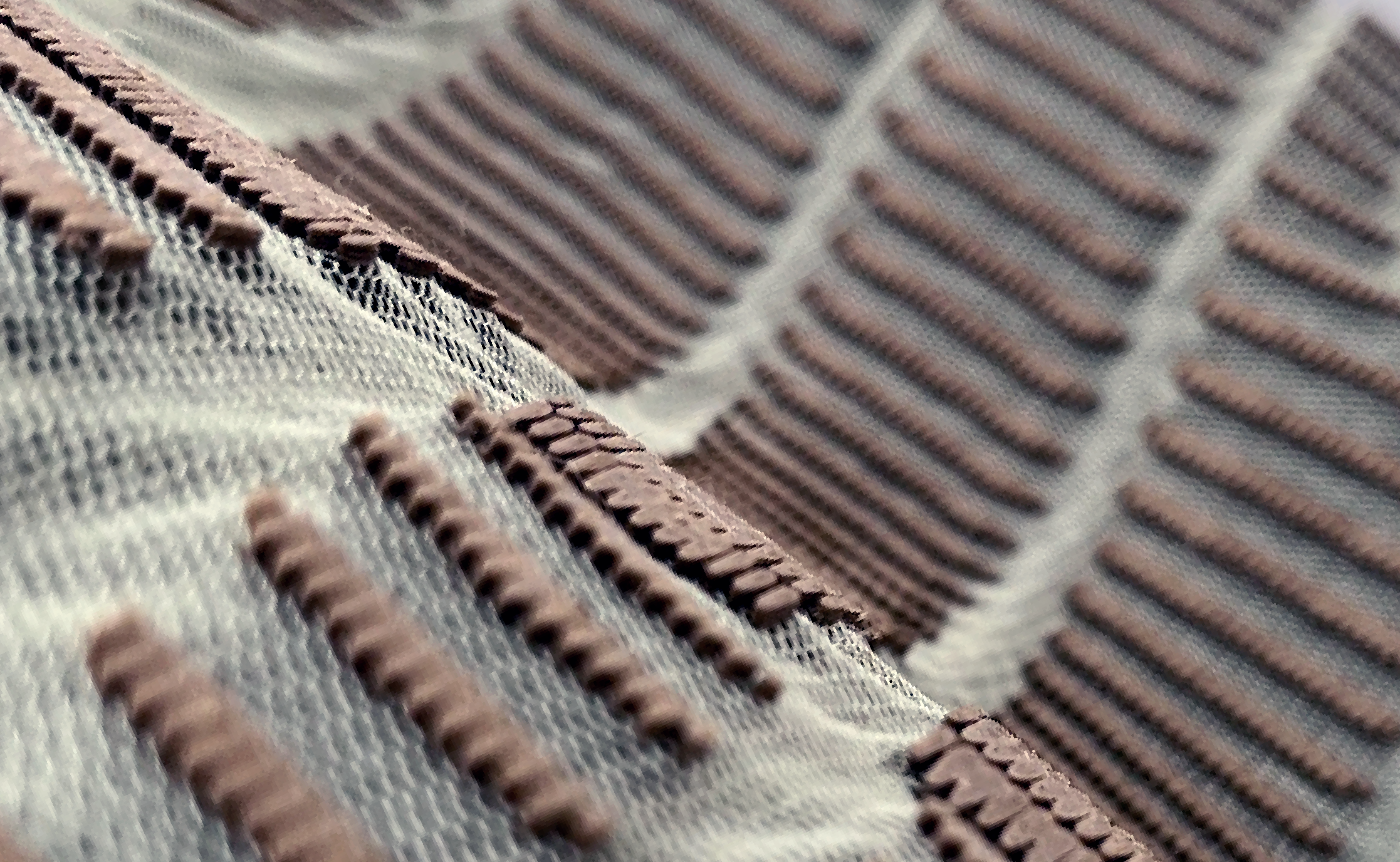
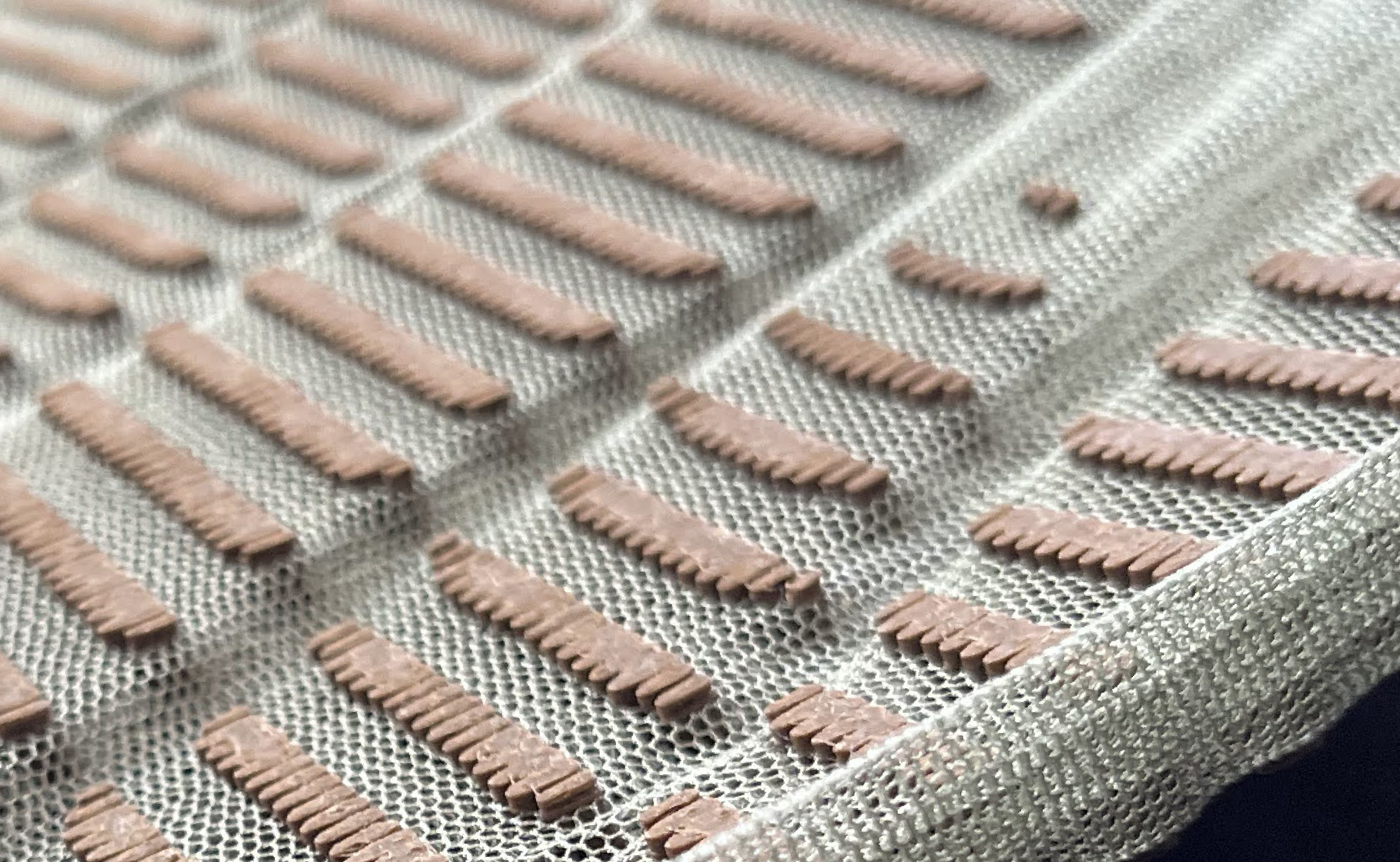
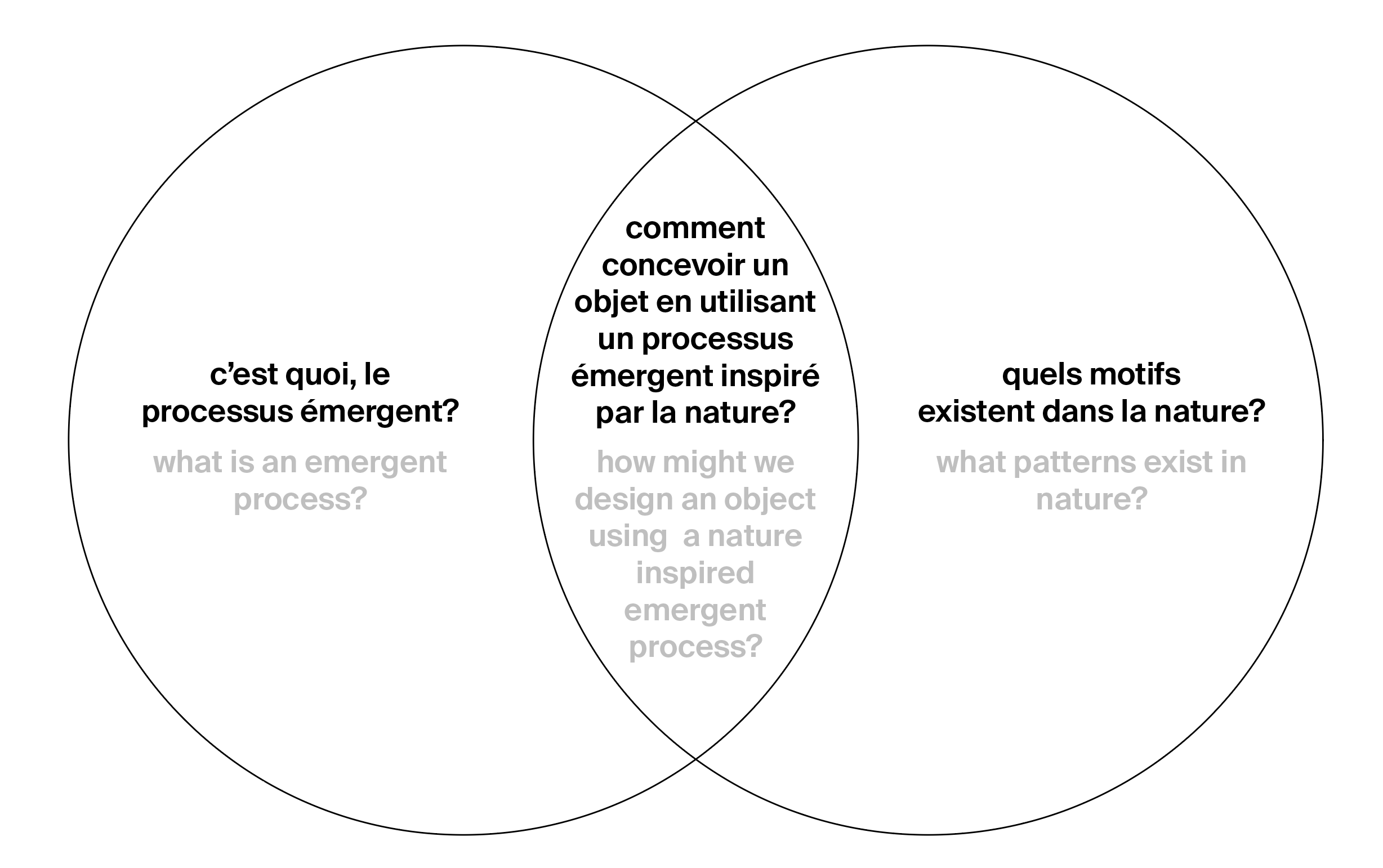
The goal of this 12 week, Masters-level studio project was to design an abstract pattern from a motif, and adapt it into a decorative object. The studio was taught in French.
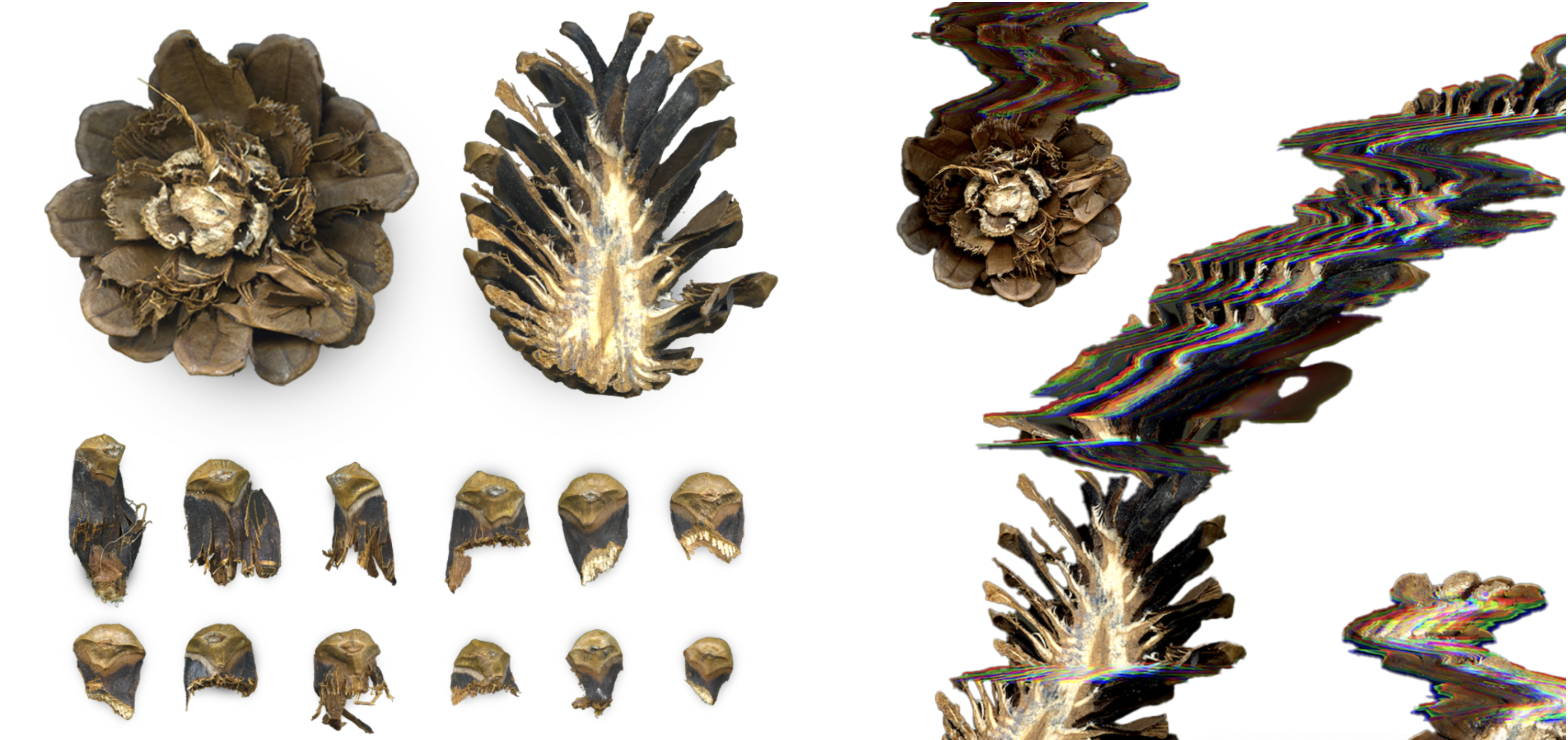
The pattern was inspired by pinecones foraged from an urban park in Paris. In order to abstract their forms, the pinecones were dissected and scanned.
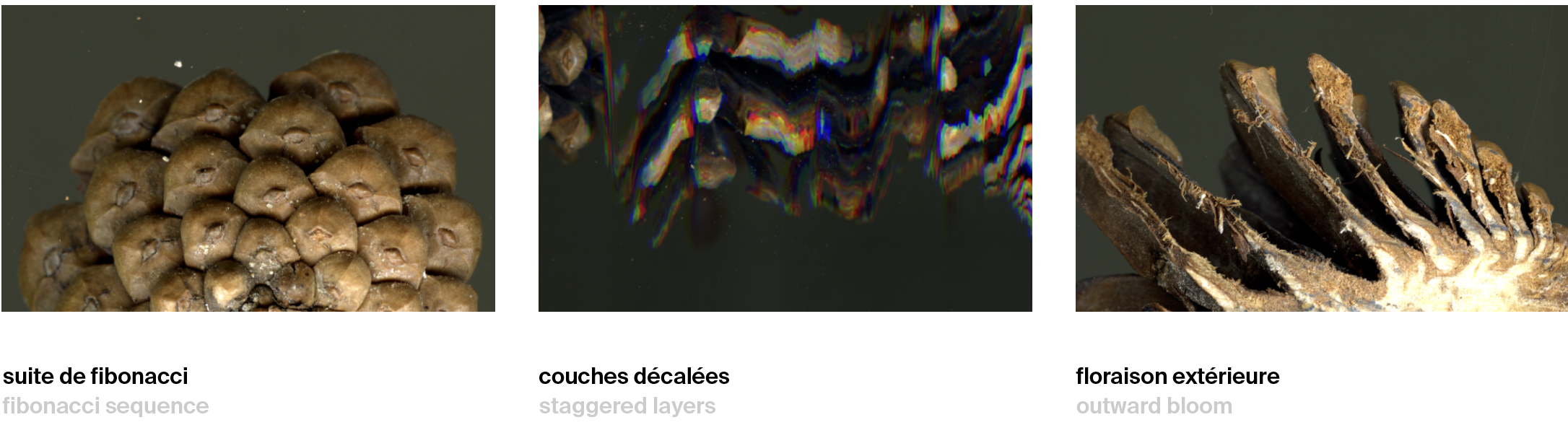
Unique properties of the pinecone include:
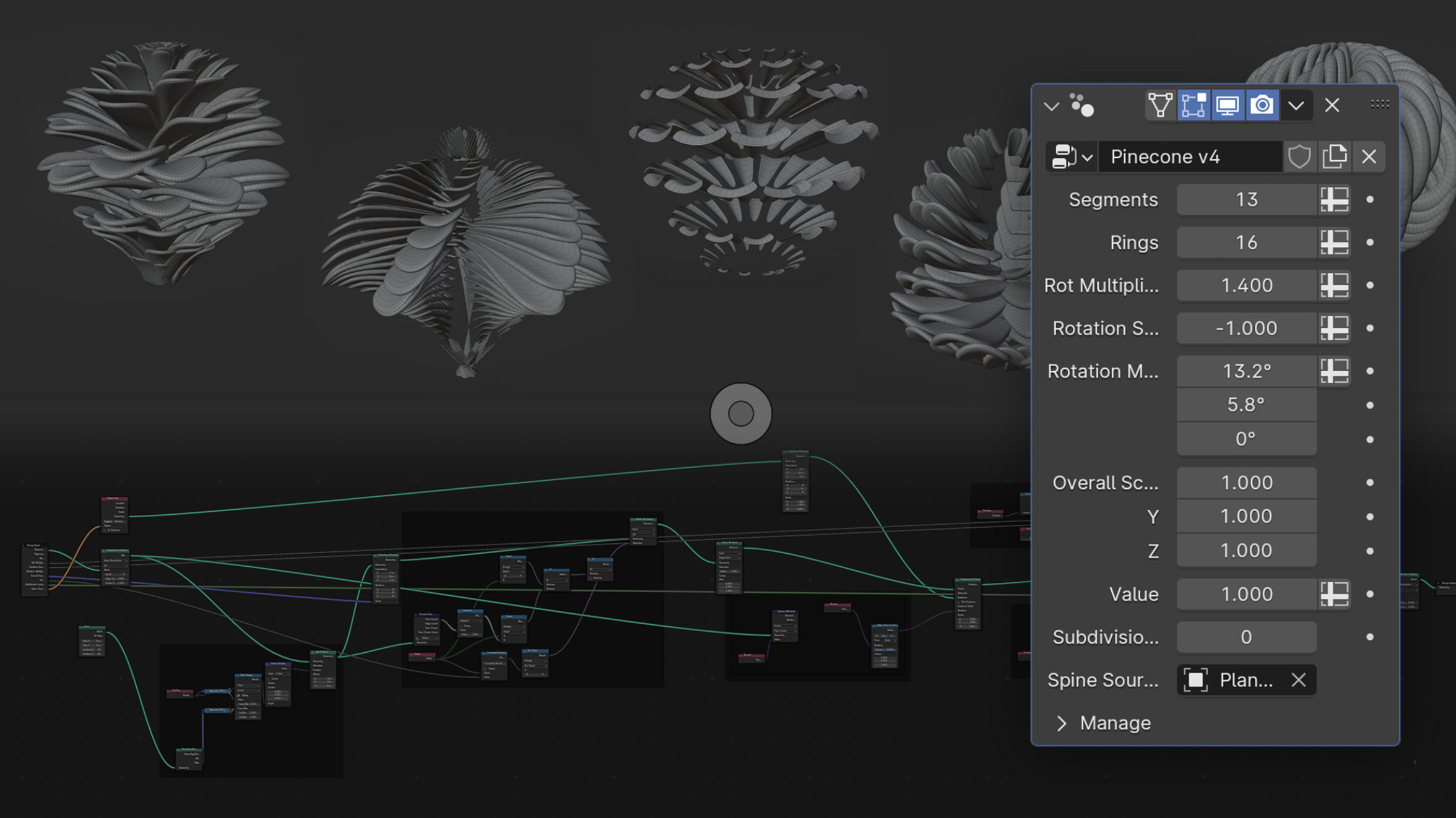
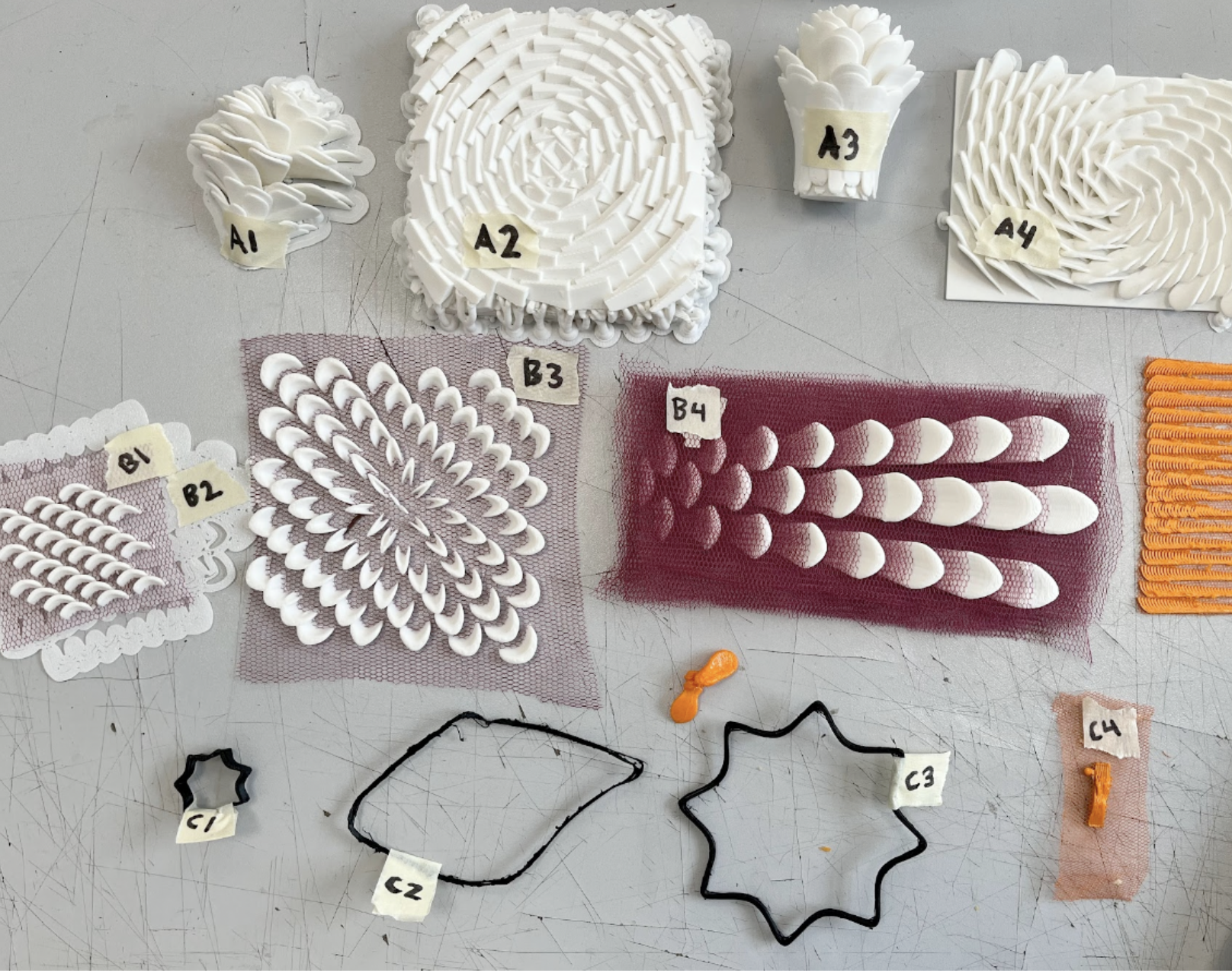
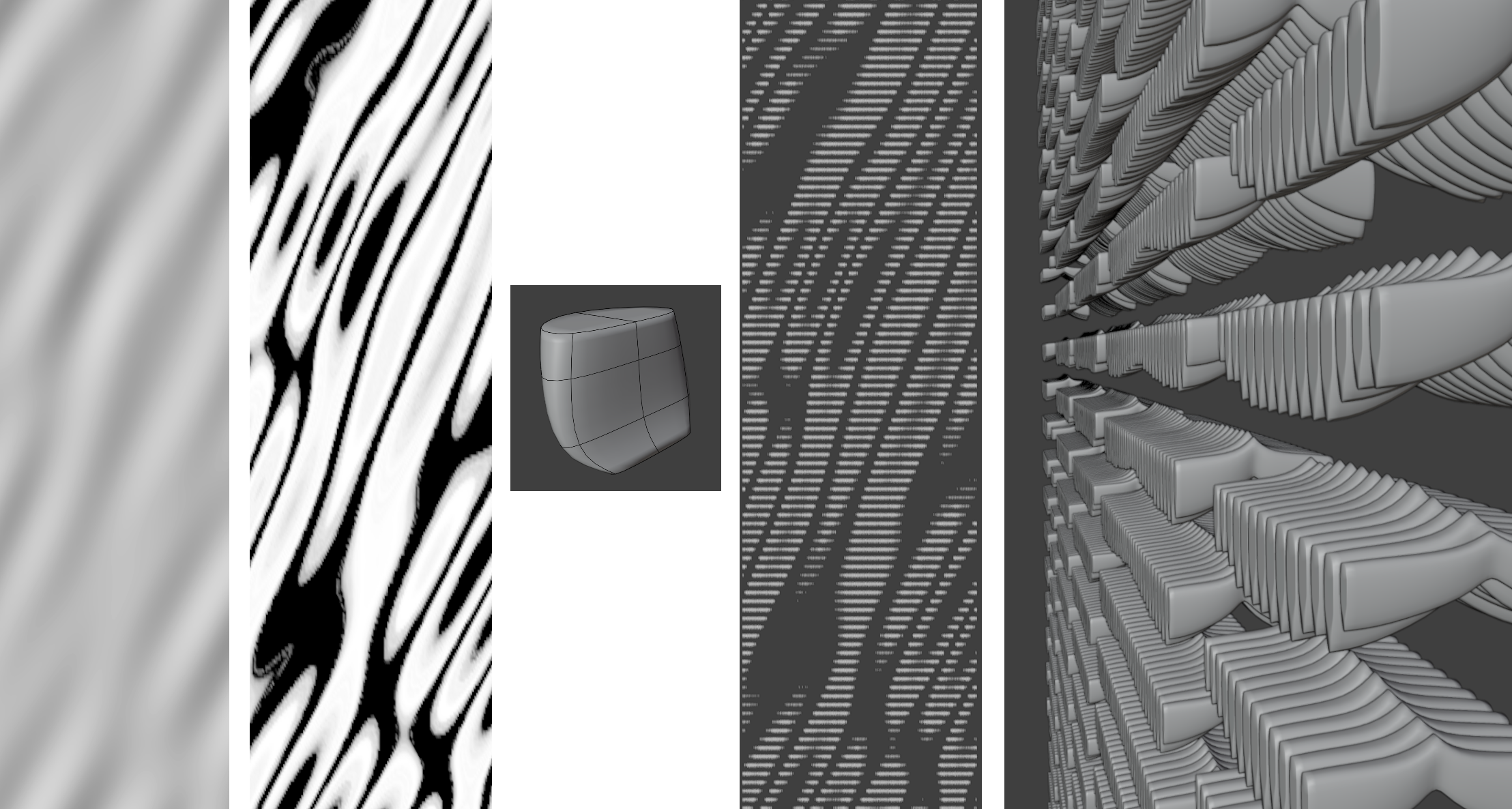
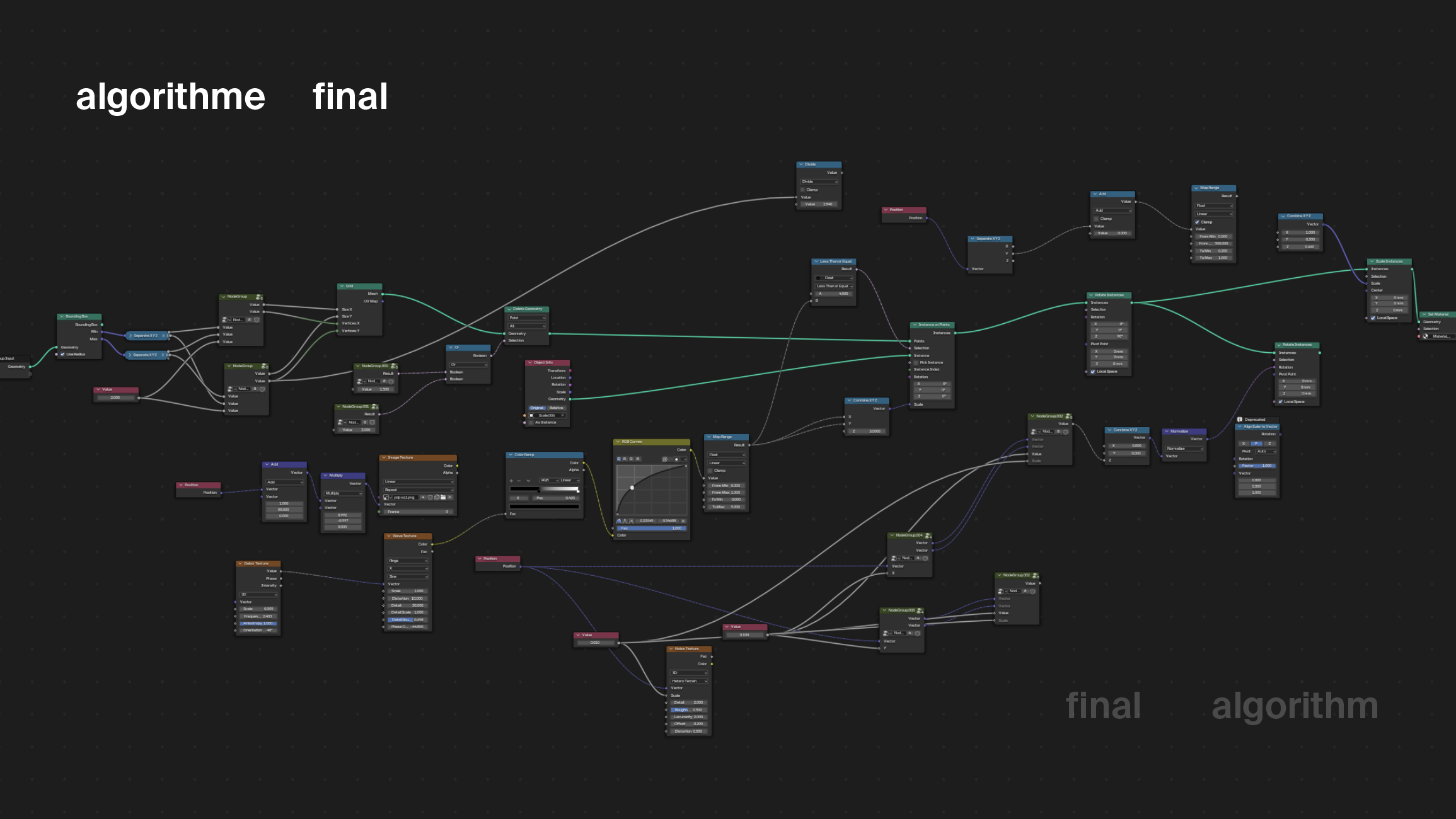
Referencing the observations from the deconstructed pinecone, I built a parametric, pinecone system in Blender using Geometry Nodes. Manipulating the parameters resulted in a variety of abstract pinecone-like structures.
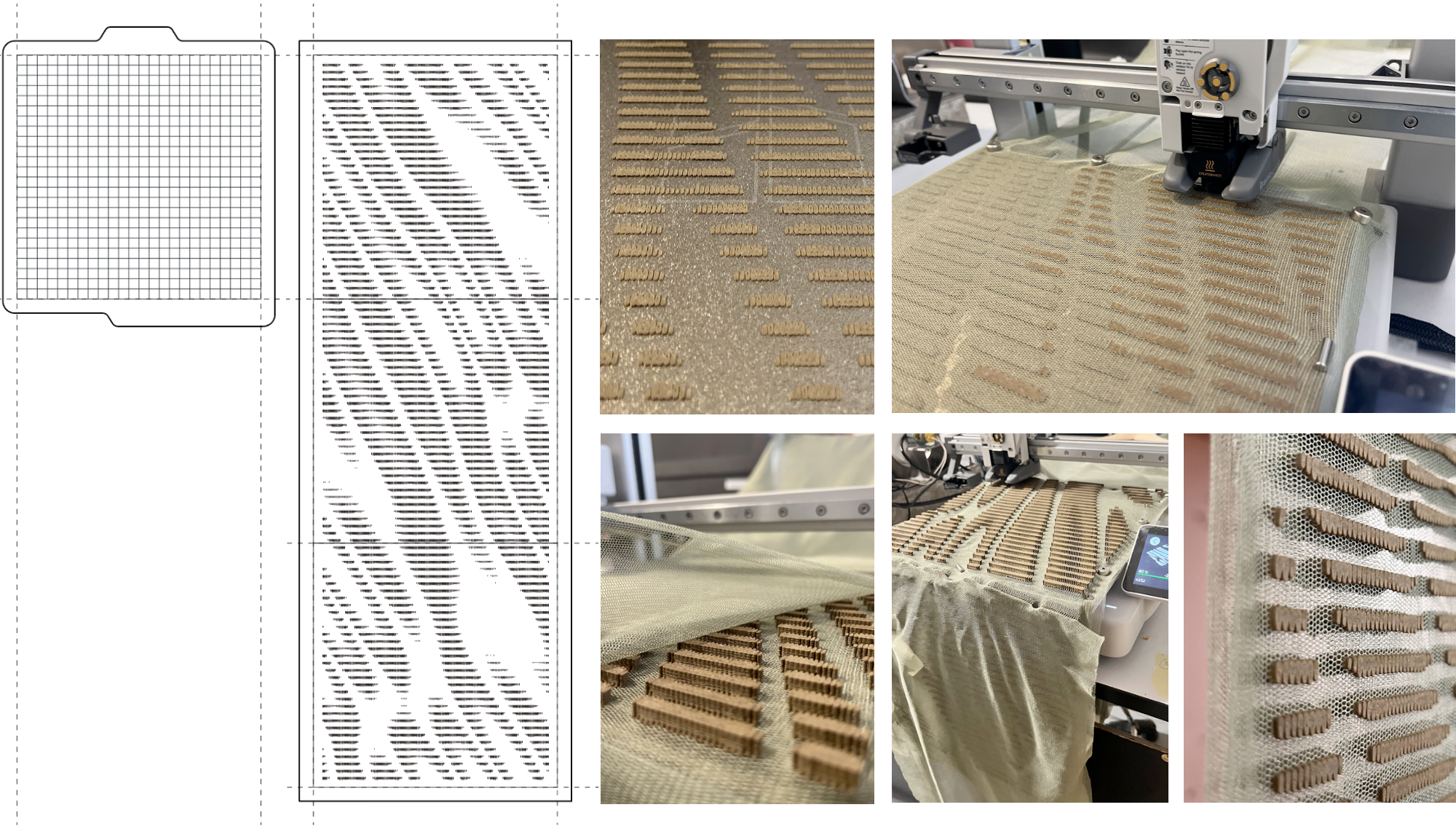
Using a 3D printer, I transformed my digital algorithms into physical patterns. When I realized I could integrate fabric into the 3D printing process to create a flexible, dynamic surface, I worked towards creating a consistent, reproducable method.
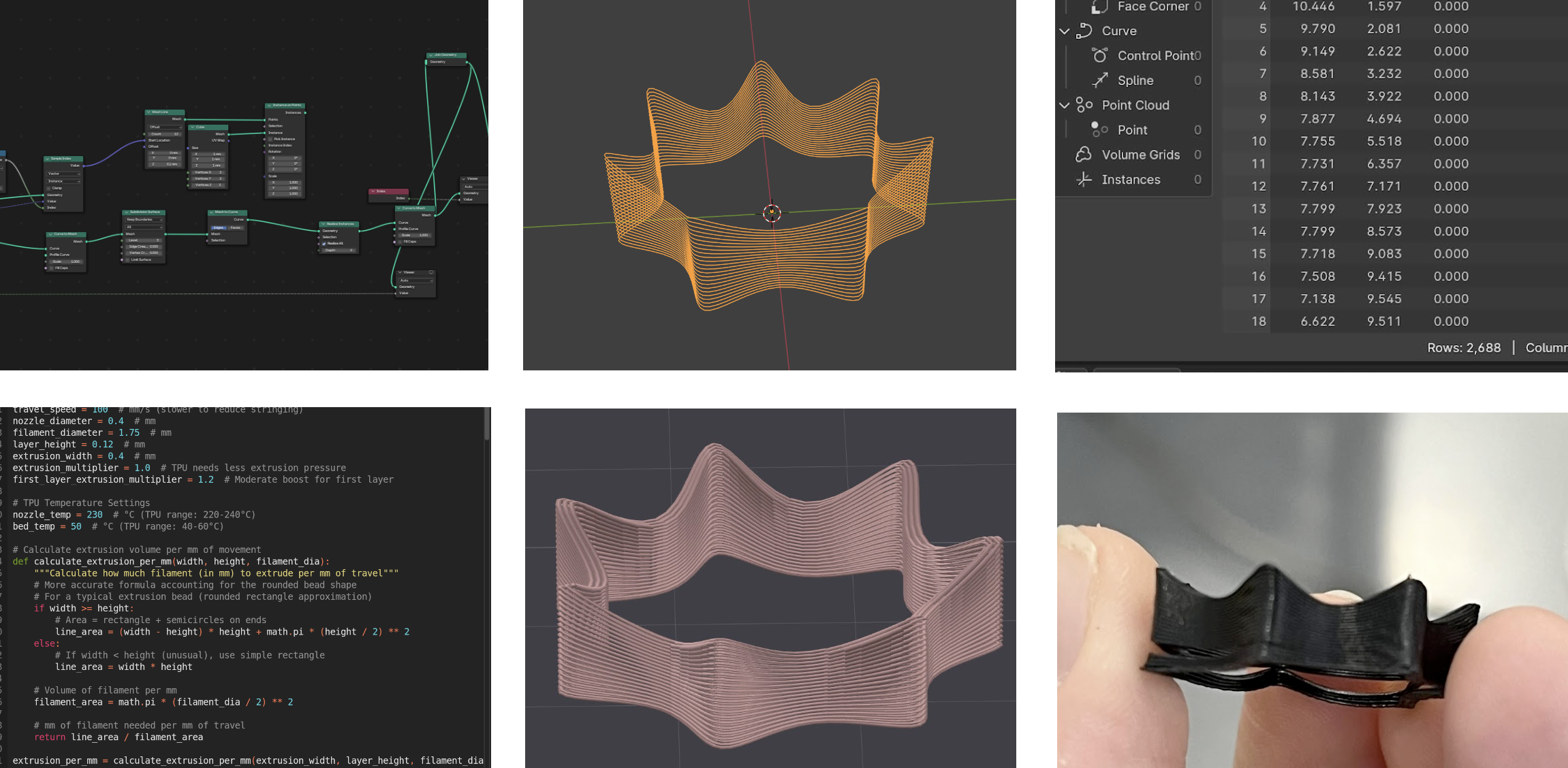
To try and further add dynamism to the surfaces, I created an original workflow that allows for printing on a variable plane (non-planar slicing) using Blender, Geometry Nodes, and Python with assistance from Claude Code.
Although this technique wasn’t used on the final object, it taught me a lot of about respecting all dimensions in my design.
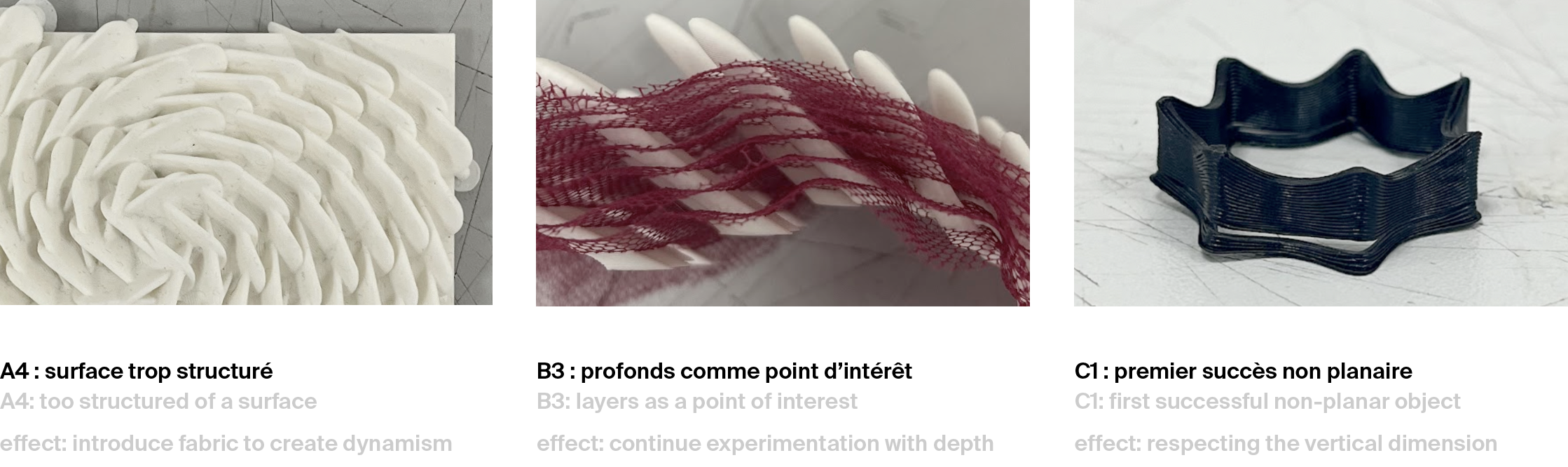
The decorative object– curtain– was derived from the physical themes emerging from prototyping.
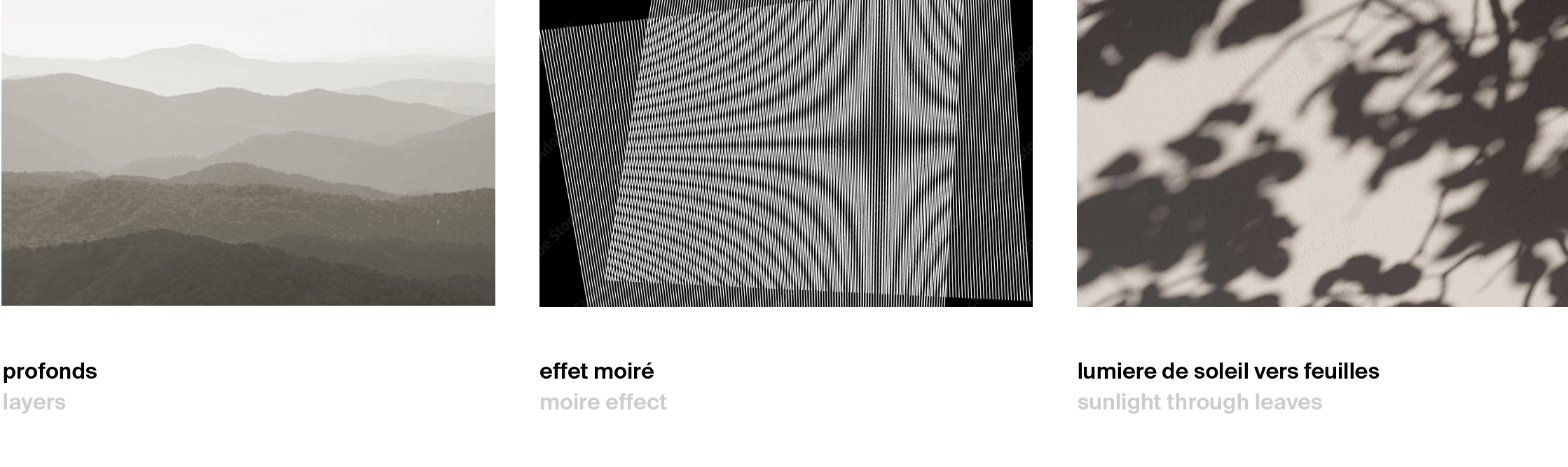
The prototype was printed out of wood-filled PLA with three embedded layers of tulle. Magnets were used to maintain tension of the tulle and prevent unwanted overlapping.
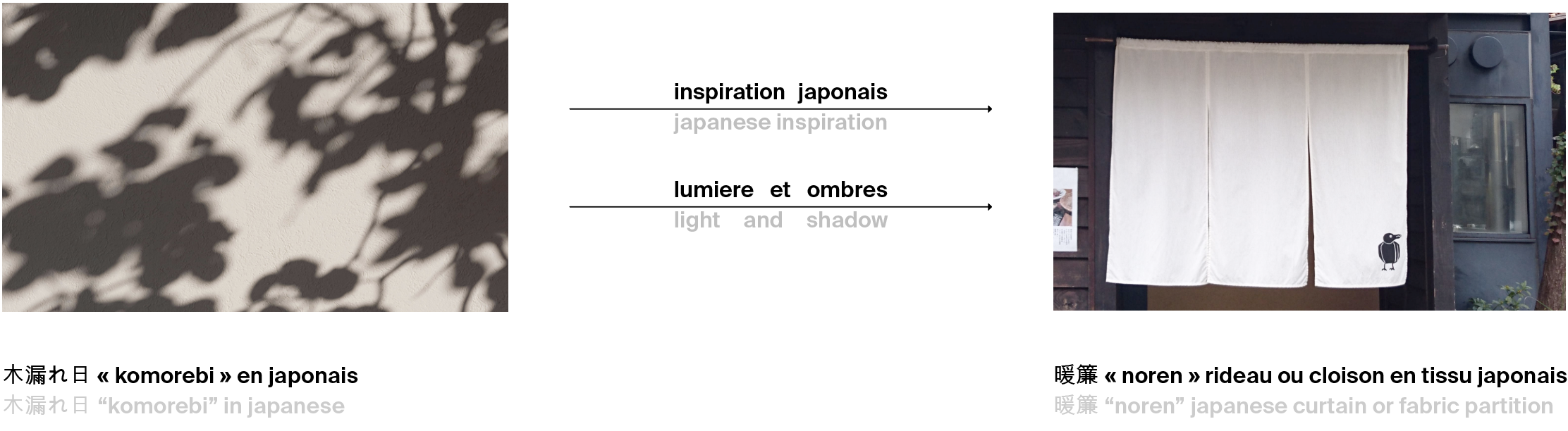
Hanging the curtain on the window produces a soft, unique light effect on an opposing wall, reminescent of light coming through tree leaves.